
Why We Invested in AccessGrid
Turning Every Phone Into a Secure Key


When was the last time you thought about the plastic card or fob jangling on your keyring? Probably never. Yet those seemingly innocuous credentials represent a surprisingly stubborn problem: billions of PVC cards manufactured annually, millions of battery-powered fobs destined for landfills, and a logistical nightmare of physical distribution, replacement, and revocation.
AccessGrid is making all of that obsolete.
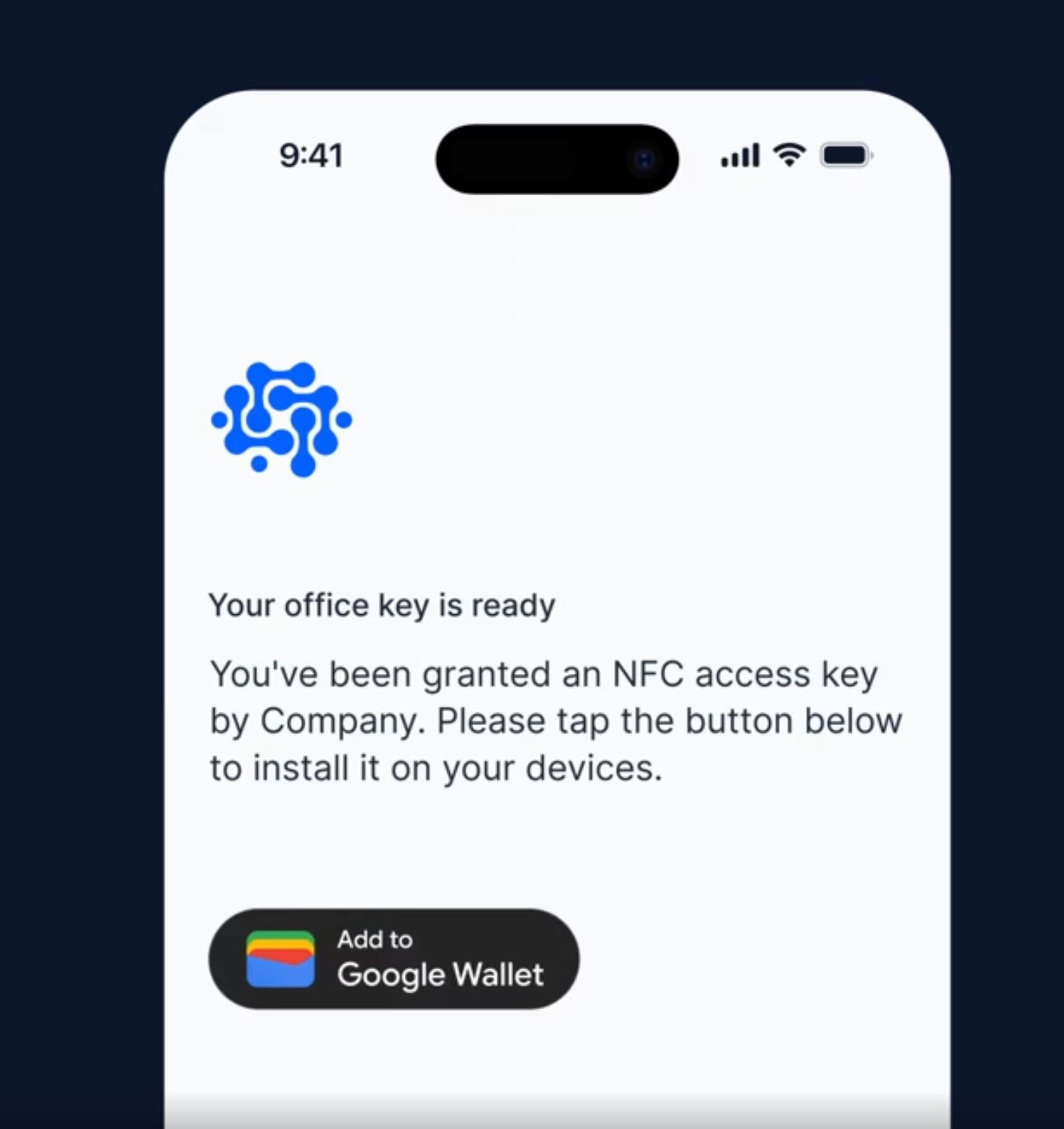
Their cloud API lets any lock company issue ultra-secure credentials directly into Apple Wallet and Google Wallet. No plastic cards. No battery-powered fobs. Just your phone, which you’re already carrying everywhere anyway.
The Overlooked Climate Impact of Physical Credentials
Over 500 million physical credentials are issued every year. Each PVC card represents about 4 grams of plastic plus the emissions from manufacturing and logistics. Battery-powered key fobs add e-waste to the equation. And when someone loses a credential or leaves a job? A security truck has to roll out to revoke access and issue replacements.
The waste adds up: thousands of tons of PVC annually, millions of batteries, and countless truck rolls for what should be instant digital updates.
More importantly, physical credentials create friction for the kinds of circular economy applications we need to scale - shared lockers, micromobility access, temporary building entry. When every interaction requires distributing and collecting physical tokens, these use cases become logistically unworkable.
Why Now?
The technology convergence that makes AccessGrid possible is recent and powerful. Modern smartphones have NFC chips. Apple and Google have opened their wallet platforms. And critically, the existing installed base of smart locks can work with phone-based credentials without any hardware changes.
This “why now” matters enormously. Previous attempts at digital credentials required replacing readers, which created a chicken-and-egg problem. AccessGrid’s SDK works with existing DESFire and HID Seos infrastructure - the same readers already installed in millions of doors worldwide.
The company launched in April 2025 and booked ARR within the first two months. That early traction validates both the technical approach and market timing.
The Lock Company Distribution Strategy
There are about 800 lock manufacturers worldwide. It’s a concentrated industry, which creates both opportunity and challenge. On one hand, a small number of strategic partnerships can unlock massive scale. On the other, each relationship is high-stakes and requires building deep trust.
AccessGrid is taking a B2B2B approach - selling to lock companies who sell to property owners. This leverages existing distribution channels and positions AccessGrid as an enabler rather than a competitor. Early partnerships already span hospitality, multifamily housing, and corporate campuses.
The unit economics work across multiple credential types. Corporate IDs might cost $5 per year per credential. Hotel room keys, which expire after each stay, run about $0.65. Platform access and template fees provide additional recurring revenue. The business model scales efficiently because it runs on serverless infrastructure with costs dominated by wallet network revenue shares rather than physical goods.
Technical Moat in a Competitive Market
The competitive landscape includes established players like SwiftConnect and Wavelynx, but AccessGrid’s approach is fundamentally simpler. Where incumbents require on-premise connectors and complex integration, AccessGrid offers a cloud API that lock companies can implement in days rather than months.
The real moat isn’t just ease of integration - it’s the firmware-level work required to provision credentials securely. AccessGrid’s system handles the cryptographic complexity of signing keys through hardware security modules (HSMs) while making the developer experience straightforward.
Being first to market with both DESFire and HID Seos support across Apple and Google Wallet platforms matters. Network effects will compound as more lock companies adopt the standard and more end users expect their phones to work as credentials.
Platform Dependency and Other Risks
The elephant in the room: AccessGrid depends on Apple and Google maintaining their current wallet APIs and revenue share arrangements. If either platform changes terms or moves up the value chain, it could impact the business model.
We spent considerable time on this risk. The mitigation comes from multiple angles. First, both Apple and Google have strategic interest in making their wallet platforms more useful - access control is a natural extension beyond payments. Second, AccessGrid’s work with HID Seos provides some independence from any single platform. Third, the company is pursuing multi-wallet strategies and industry certifications that reduce reliance on any single gatekeeper.
Security is another critical consideration. A breach of credential signing keys could theoretically unlock many doors. The team has addressed this through HSM isolation and is pursuing SOC 2 certification. Apple’s own security review process, which AccessGrid passed, provides additional validation.
Team and Execution
The founder previously scaled QuickNode, a YC-backed blockchain infrastructure company, to thousands of developer customers. That experience with infrastructure-as-a-service business models and developer tools shows in AccessGrid’s product design and go-to-market approach.
The team moves extremely fast, integrating with Apple Wallet in under three months and launching commercially just weeks later.
Looking Ahead
The longer-term vision extends beyond replacing plastic cards. As phone-based credentials become ubiquitous, they enable new use cases that weren’t economically viable with physical tokens - shared workspace access, temporary building entry, micromobility unlocking, parcel locker access. These circular economy applications have been held back by the logistics of physical credential management.
We also see potential for AccessGrid to strengthen building security while reducing environmental impact. Instant remote revocation eliminates the security window between when someone should lose access and when physical credentials can be collected and deactivated. Better security means fewer breaches, which means fewer emergency responses and replacements.
Why We Invested
AccessGrid exemplifies several themes we look for at Third Sphere. The company addresses a real environmental problem - unnecessary plastic waste and e-waste at scale. The technology upgrades existing infrastructure rather than requiring wholesale replacement. The business model aligns incentives across the value chain. And the timing is right, with smartphone penetration, wallet platform capabilities, and market pull all converging.
Most importantly, the founder demonstrated the kind of execution speed and technical depth that matters at the earliest stages. From concept to working product to paying customers in a matter of months, with a Fortune 500-compatible security model and partnerships with platform giants.
We’re excited to partner with Auston, Nathali, and AccessGrid as they work to make physical credentials obsolete and unlock new models for shared access in a circular economy.
More on their seed round
AccessGrid raises $4.4M to turn your smartphone into a universal key [Refresh Miami]
AccessGrid raises $4.4M to help turn phones into key fobs [TechCrunch]